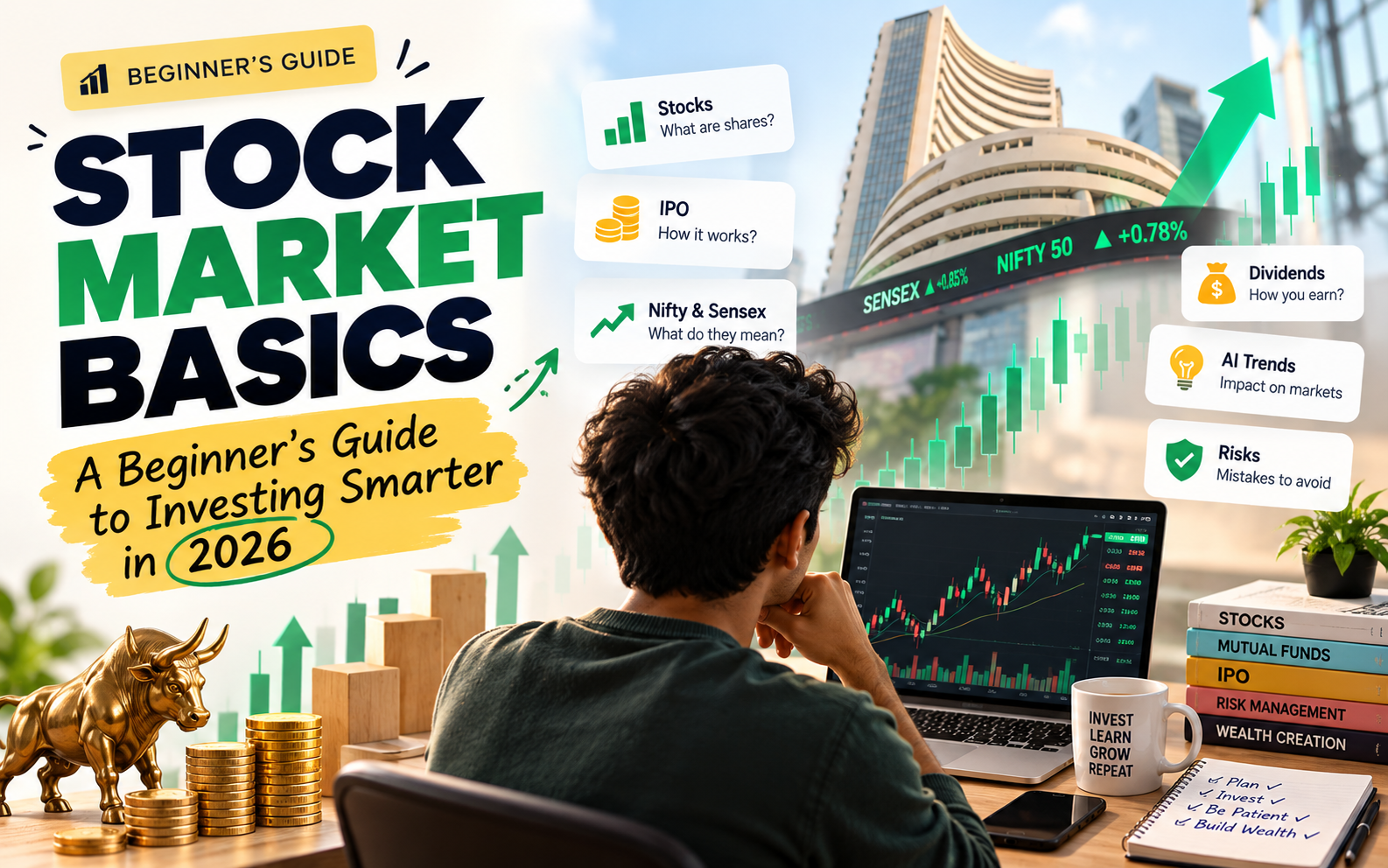
# Stock Market Basics: A Simple Guide for Beginners
The stock market can seem complicated when you are just starting out. You may hear terms such as stocks, shares, indices, dividends, brokers, portfolios, and market volatility and wonder how everything fits together. The good news is that you do not need to be a financial expert to understand the basics.
Learning how the stock market works is the first step toward making informed financial decisions. Whether your goal is long-term wealth creation, saving for future needs, or simply understanding how financial markets operate, having a strong foundation can help you approach investing with greater confidence.
## What Is the Stock Market?
The stock market is a marketplace where investors buy and sell shares of publicly listed companies. When you purchase a share, you are essentially purchasing a small ownership stake in that company.
For example, if a company has millions of shares and you purchase some of them, you become a shareholder. If the company performs well and investors become more optimistic about its future, the share price may rise. On the other hand, poor business performance, economic problems, or negative market sentiment can cause the price to fall.
In India, some of the major stock exchanges include the National Stock Exchange (NSE) and Bombay Stock Exchange (BSE). These exchanges provide organized platforms where securities can be bought and sold.
## Why Do People Invest in the Stock Market?
One of the biggest reasons people invest in stocks is the possibility of growing their wealth over the long term.
### 1. Wealth Creation
Stocks can provide capital appreciation when the value of an investment increases over time. Long-term investors may benefit from the growth of successful businesses, although stock-market returns are never guaranteed.
### 2. Dividend Income
Some companies distribute a portion of their profits to shareholders in the form of dividends. Dividend-paying stocks can provide an additional source of income, depending on the company's financial performance and dividend policy.
### 3. Potential Protection Against Inflation
Inflation reduces the purchasing power of money over time. Investments that have the potential to grow can help investors work toward maintaining and increasing the real value of their wealth.
### 4. Ownership in Businesses
Buying shares allows investors to participate in the ownership of companies. Instead of simply keeping money aside, investors can become partial owners of businesses they believe have strong long-term potential.
## Important Stock Market Terms Every Beginner Should Know
Before investing, it is useful to understand some common terminology.
**Share:** A unit of ownership in a company.
**Stock Exchange:** A regulated marketplace where securities are bought and sold.
**Index:** A group of selected stocks used to represent the performance of a particular market or segment. Examples in India include the Nifty 50 and Sensex.
**Broker:** A platform or intermediary that allows investors to buy and sell securities.
**Portfolio:** The collection of investments owned by an investor.
**Bull Market:** A period when market prices are generally rising and investor sentiment is positive.
**Bear Market:** A period when market prices are generally declining and investor sentiment is negative.
**Market Capitalization:** The total market value of a company's outstanding shares.
Understanding these terms makes financial news, market discussions, and investment information much easier to follow.
## Different Ways to Invest
The stock market offers several investment options, and each comes with different levels of risk and potential return.
### Individual Stocks
Investors can purchase shares of individual companies. This gives them direct exposure to the performance of those businesses. However, choosing individual stocks requires research and carries company-specific risks.
### Mutual Funds
Mutual funds collect money from multiple investors and invest it in a portfolio of securities. They are managed according to a particular investment strategy and can provide diversification.
### Exchange-Traded Funds
Exchange-traded funds, commonly known as ETFs, are investment funds that trade on stock exchanges. Many ETFs track an index or a particular market segment and can offer diversification through a single investment.
### Bonds
Bonds are debt instruments through which investors lend money to governments, companies, or other organizations. They generally have different risk and return characteristics compared with equities.
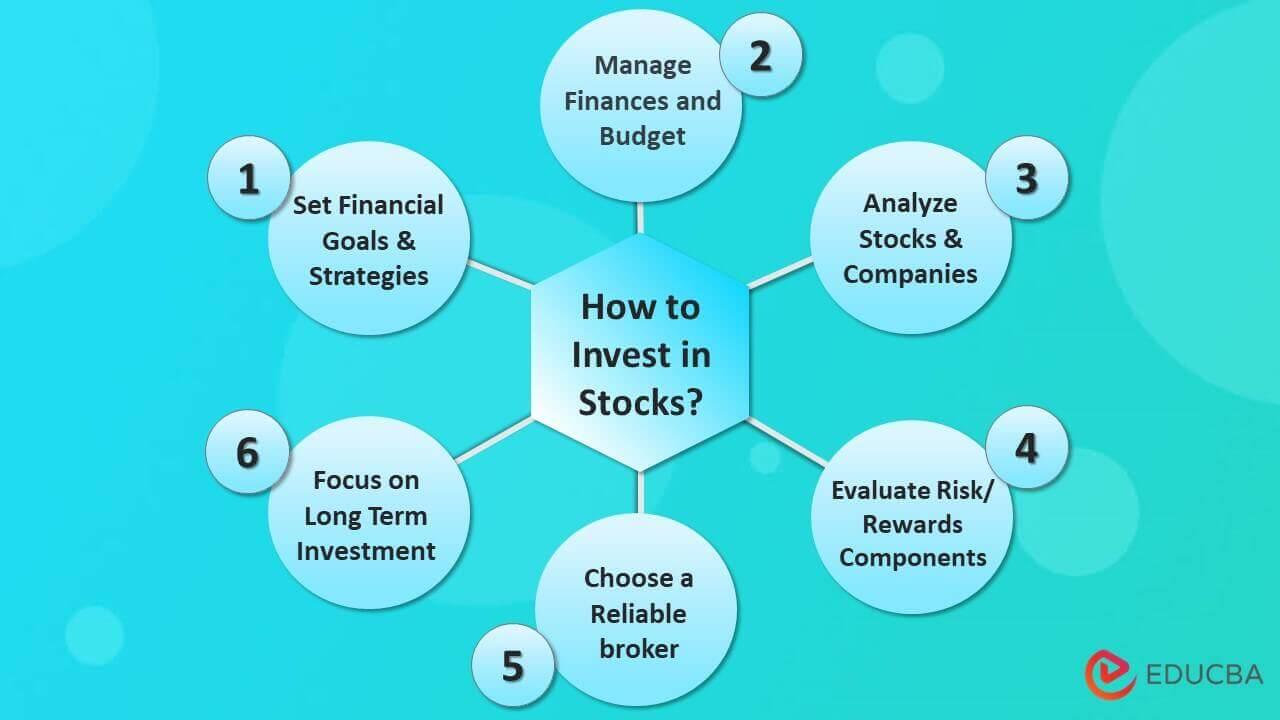
## How Can Beginners Start Investing?
Starting your investment journey does not have to be complicated. The important thing is to follow a disciplined process.
### Step 1: Learn the Basics
Before putting money into the market, understand fundamental concepts such as stocks, mutual funds, diversification, risk, returns, and market volatility.
### Step 2: Set Financial Goals
Identify why you are investing. Your goal could be building long-term wealth, planning for education, purchasing a home, or preparing for retirement. Your investment approach should reflect your financial goals and time horizon.
### Step 3: Understand Your Risk Tolerance
Every investment carries some level of risk. Consider how comfortable you are with fluctuations in the value of your investments and how much loss you could realistically handle.
### Step 4: Start With an Appropriate Amount
Beginners should avoid investing money they may immediately need for essential expenses. Start with an amount that fits comfortably within your financial situation.
### Step 5: Diversify
Putting all your money into one company or one type of investment can increase risk. Diversification means spreading investments across different assets, companies, sectors, or investment categories.
### Step 6: Research Before Investing
Do not invest simply because someone recommends a stock on social media or because its price has recently increased. Study the company's business, financial performance, industry, valuation, and future prospects.
## Understanding Risk and Market Volatility
Stock prices can move up and down frequently. This is known as market volatility. Prices can be affected by company results, interest rates, inflation, government policies, global events, economic conditions, and investor sentiment.
Short-term price movements can sometimes be unpredictable. This is why beginners should be careful about making investment decisions based purely on emotions.
Seeing your investment decline temporarily does not automatically mean that the underlying business has become bad. At the same time, investors should not assume that every falling stock will eventually recover. Proper research and risk management are essential.
## Investing vs. Trading
Investing and trading are not the same thing.
**Investing** generally focuses on holding assets for a longer period with the objective of benefiting from business growth and long-term market performance.
**Trading** generally involves buying and selling financial instruments more frequently to take advantage of shorter-term price movements.
Trading can require significant knowledge, discipline, risk management, and time. Beginners should understand the risks before attempting short-term trading strategies.
## Common Mistakes Beginners Should Avoid
New investors often make mistakes because of emotions, lack of research, or unrealistic expectations.
Some common mistakes include investing without understanding the asset, following market tips blindly, putting too much money into one stock, making decisions based on fear or greed, expecting quick profits, and ignoring risk management.
Another common mistake is trying to predict every market movement. No one can consistently predict exactly when the market will rise or fall.
## The Importance of Financial Education
Financial education is one of the most valuable tools for a new investor. The more you understand about markets, businesses, financial statements, risk, and investment strategies, the better prepared you can be to make informed decisions.
Instead of focusing only on finding the next “multibagger” or making quick profits, beginners should focus on developing knowledge and building disciplined financial habits.
## Final Thoughts
The stock market is not a shortcut to becoming wealthy overnight. It is a financial marketplace that provides opportunities as well as risks.
For beginners, the best approach is to learn first, understand your financial goals, research investments carefully, manage risk, and remain patient. Successful investing is generally about making informed decisions consistently rather than trying to predict every short-term market movement.
Start with the basics, continue learning, and make financial decisions based on research rather than emotions. With knowledge, discipline, and a long-term perspective, you can build a stronger understanding of the stock market and make more informed investment decisions.
**Disclaimer:** This article is intended for educational and informational purposes only. It should not be considered financial, investment, or trading advice. Investors should conduct their own research and consider consulting a qualified financial professional before making investment decisions.
S
Stock Market Basics